If your house feels humid with AC running, the system may cool the air without removing enough moisture because of short cycles, fan settings, outdoor moisture, or equipment problems. Measure indoor humidity first. Then check basic settings and moisture sources before arranging service if the damp feeling continues.
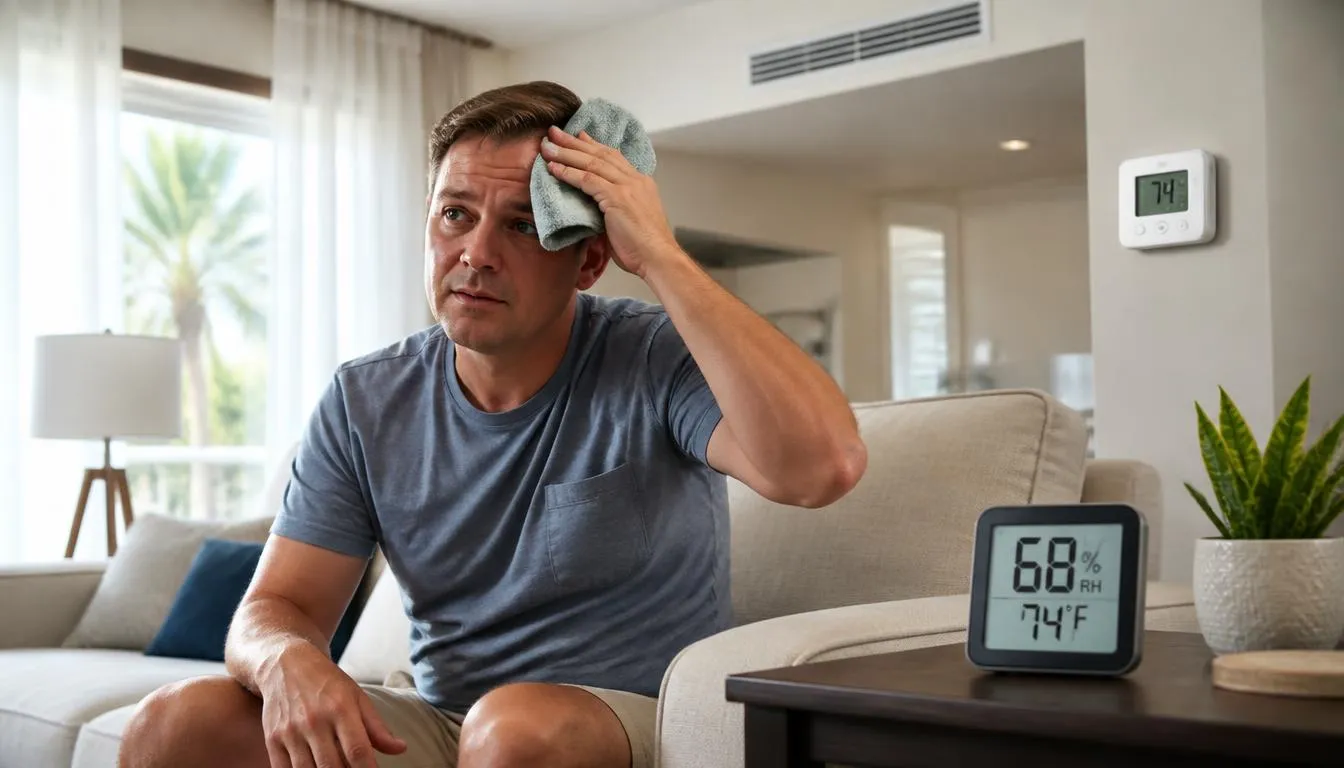
The thermostat shows a comfortable temperature, but your skin feels sticky. The sofa feels clammy, and turning the setting down only makes the room colder. It is frustrating when the AC runs but comfort never follows.
Temperature tells only part of the story. Your cooling system also needs to remove moisture, and several things can interfere with that job.
Finding the cause starts with a few observations. Notice when rooms feel damp, whether the cooling cycles seem brief, and if the problem affects the whole home.
Why Can Your House Feel Cool but Still Feel Clammy?
Cooling and moisture removal happen together, but they do not always meet your home’s needs at the same pace. The air may reach the thermostat setting before the system removes enough water vapor.
Humidity also changes how comfortable a room feels. With more moisture in the air, sweat evaporates less easily, which can leave you feeling sticky.
Lowering the thermostat does not always fix this. If the moisture content stays the same while the air gets colder, relative humidity rises. You can end up with a house that feels cool but clammy.
That is why checking moisture levels matters more than repeatedly changing the temperature. The goal is comfortable air, not simply a lower number.
For example, the living room may feel fine in the afternoon but become damp overnight. That does not necessarily mean the AC fails at night. Cooler outdoor temperatures can reduce the need for cooling, leaving fewer operating hours to remove moisture. Tracking both temperature and humidity helps show whether the issue follows cooling demand or another source, such as evening showers.
Check Your Indoor Humidity Before Changing AC Settings
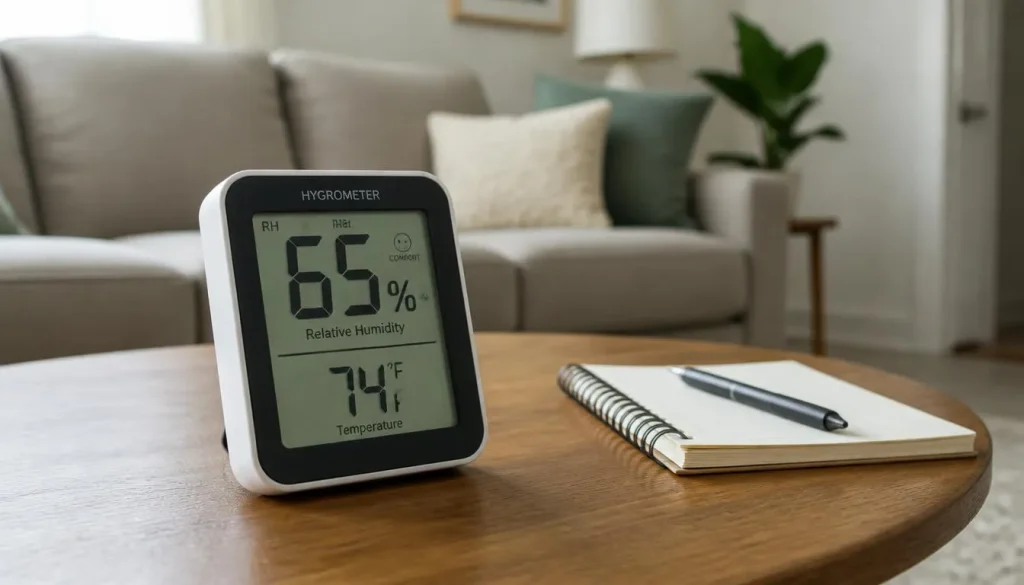
A hygrometer measures relative humidity, the amount of water vapor present compared with the amount needed to saturate air at that temperature. Many small digital models display both temperature and humidity.
The EPA recommends keeping indoor humidity below 60 percent, ideally between 30 and 50 percent when possible. Its indoor humidity guidance provides a useful starting point.
Place the meter in a frequently used room, away from direct sunlight, supply vents, and steam. Follow the device instructions and let the reading settle.
Check morning and evening readings over several days. Note showers, cooking, rain, and cooling operation. A brief bathroom spike differs from high readings throughout the house.
Small differences between meters can reflect accuracy limits. Look for a repeated pattern rather than treating one reading as proof of an AC fault.
How Your Air Conditioner Removes Moisture From the Air
Your indoor blower moves air across the cold evaporator coil. When that coil sits below the air’s dew point, water vapor turns into liquid on its surface. The dew point is the temperature at which condensation begins.
That water collects in a drain pan and leaves through the condensate drain. Meanwhile, the system sends cooler air back into your rooms.
Moisture removal depends on coil temperature, airflow, and how long cooling operates. Hearing the indoor fan does not prove the compressor is running or the coil is cold.
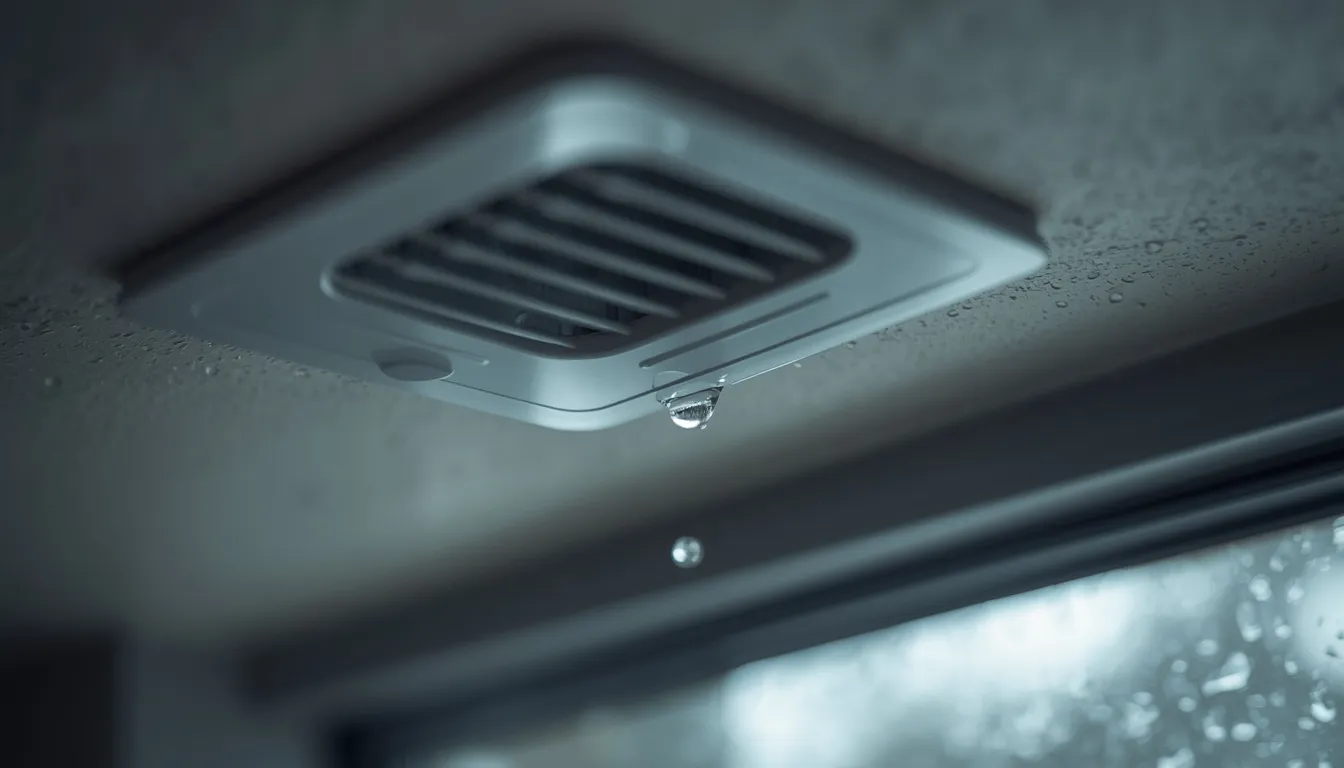
Water moving through the proper drain is normal. Water dripping onto the floor, ceiling, or equipment cabinet is not. Report leaks promptly rather than assuming they show that the AC removes humidity well.
Could Your Thermostat Fan Setting Keep the House Humid?
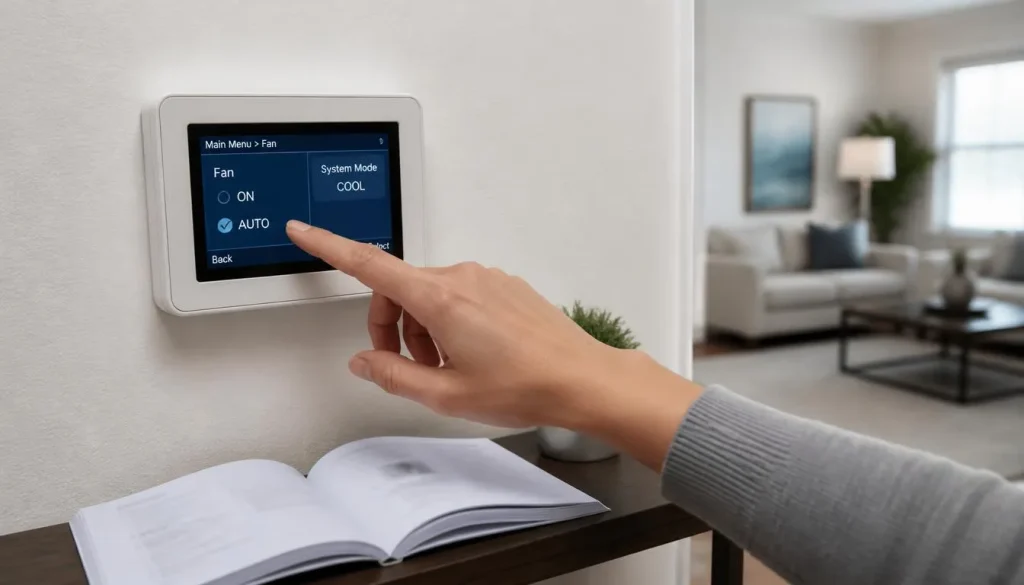
On many central systems, the fan setting offers On and Auto. On keeps the indoor blower running between cooling cycles. Auto usually runs it during heating or cooling calls, sometimes with a brief programmed delay.
After cooling stops, some water remains on the coil. Continuous airflow can help that water evaporate back into the house instead of leaving through the drain.
If your fan stays on constantly, check the operating guide before changing it to Auto. This may improve moisture control, but it will not repair another fault.
Some systems use special humidity controls or ventilation settings. Follow their instructions rather than disabling those features. The fan’s Auto setting also differs from an automatic mode that switches between heating and cooling.
Why Short Cooling Cycles Can Leave Moisture Behind
An oversized air conditioner may lower the room temperature quickly and shut off before removing enough moisture. That can create a cold room with a damp feeling.
However, brief cycles do not prove the system is too large. A poorly placed thermostat, control problem, or equipment fault may also interrupt cooling. Mild weather can reduce cooling demand even when outdoor air remains humid.
Watch whether the compressor repeatedly starts and stops, not just whether you hear airflow. Share the pattern with a technician without opening equipment covers.
There is no single ideal cycle length for every system. Equipment type, weather, and indoor conditions all matter.
Before considering replacement, request a cooling load assessment. Choosing a larger unit without checking the home’s needs can make moisture control worse. ask.ifas.ufl.edu
Where Extra Moisture Enters Your Home
Even a working AC can struggle when moisture enters faster than it can remove it. Open doors and windows allow humid outdoor air inside. Gaps around openings can create a less obvious path.
Leaky return ducts in an attic or other unconditioned space may pull moist air into the system. Other duct leaks can affect pressure and increase outdoor air entering the home.
Daily activities add moisture too. Showers, boiling water, and drying laundry indoors all raise the amount your system must handle.
Use bathroom exhaust fans during showers and afterward as needed. Use a kitchen hood that vents outdoors while cooking. A recirculating hood does not send moisture outside.
Check for plumbing leaks or damp building materials. An AC cannot solve an ongoing water leak by itself. Persistent wet areas need their own inspection and repair.
Can Dirty Coils, Airflow Problems, or Drain Trouble Affect Humidity?
A dirty filter or coil can change airflow and reduce cooling performance. Incorrect blower settings can also affect moisture removal. These problems need proper checks because airflow that is too low may cause freezing.
Replace an accessible dirty filter using the correct size and approved type. Do not adjust internal blower speeds or deliberately block vents to make the coil colder.
Drain trouble requires a separate look. A blocked condensate drain may cause standing water, overflow, or a safety switch that stops cooling. It does not automatically explain humidity throughout the house.
Look only at safely accessible areas. If you find ice or water leaking from the equipment, turn cooling off and arrange service. Do not bypass a drain safety switch or reach into wet electrical components.
What Can You Safely Do to Make Your Home Less Humid?
Start with these practical steps:
- Measure humidity in a main living area and record the readings.
- Check the thermostat fan setting against the equipment instructions.
- Turn the system off before inspecting an accessible filter.
- Keep supply vents and return grilles open and clear.
- Close windows when outdoor air is warm and humid.
- Use exhaust fans that carry shower and cooking moisture outdoors.
- Address visible water leaks and dry wet surfaces promptly.
Keep a steady, comfortable temperature while watching the trend. Repeatedly lowering the setting can hide the pattern without correcting its cause.
A portable dehumidifier may help in a damp room. Size it for the space, follow clearance instructions, and empty or drain it properly. It releases some heat indoors.
Use it alongside checks for leaks and AC problems, rather than treating it as a substitute for repairs.
When Does Persistent Humidity Need an HVAC Inspection?
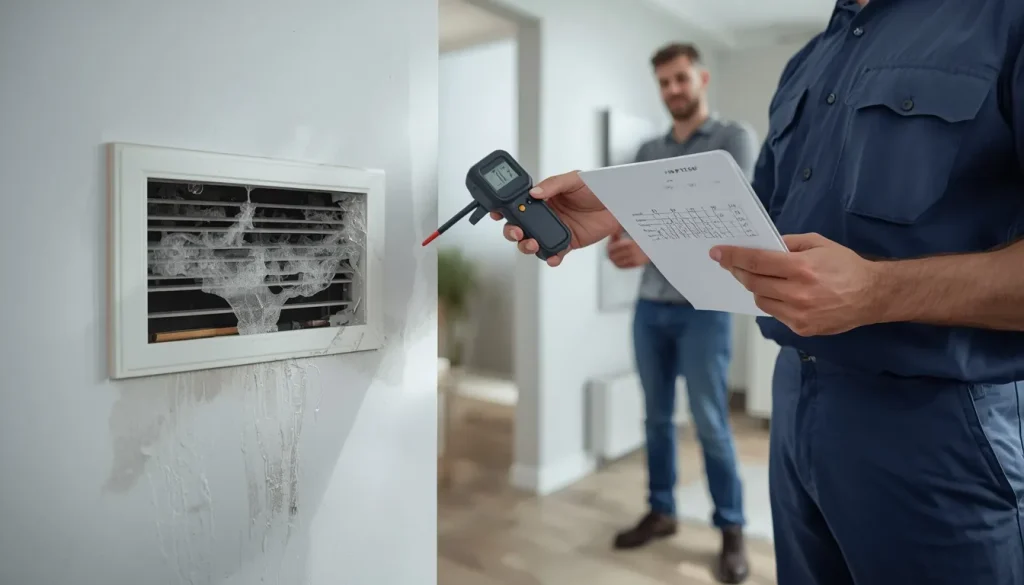
Arrange an inspection if humidity stays high after basic changes, rooms remain clammy, or the system cycles unusually. Recurring condensation, musty smells, and water near equipment also deserve attention. An odor alone does not confirm mold or identify its source.
Condensation also depends on the temperature of the surface. A cold vent can collect moisture even when a room meter does not show an unusually high reading. Damaged duct insulation or air leaks around the vent may contribute. Tell the technician exactly where you see water. Avoid assuming that every wet surface means you need a dehumidifier, since the repair may involve insulation, sealing, or drainage instead.
Bring your humidity readings and notes about weather, showers, and fan settings. Mention whether the problem began after new equipment, a thermostat change, or home improvements.
A technician may check airflow, coil condition, refrigerant performance, drainage, duct leakage, and equipment sizing. Ask which findings explain the moisture problem.
Some homes need dedicated dehumidification, especially when moisture demand stays high while cooling demand stays low. Ask whether repairs, control changes, or added humidity equipment best fit your situation.
Regular AC maintenance helps identify developing issues, but it cannot prevent every moisture problem.
Get Humidity Control Help From The Air Squad in West Palm Beach, FL
A comfortable home needs both temperature and moisture control. Start by measuring humidity, checking fan settings, and reducing avoidable moisture. If the problem remains, a detailed professional inspection can help you choose the right next step.
The Air Squad offers AC maintenance and repair services. Share your recorded readings, thermostat settings, and the times your home feels damp so the team can investigate the cause.
Contact the team to request an inspection and get help understanding why your home stays humid while the air conditioner runs.