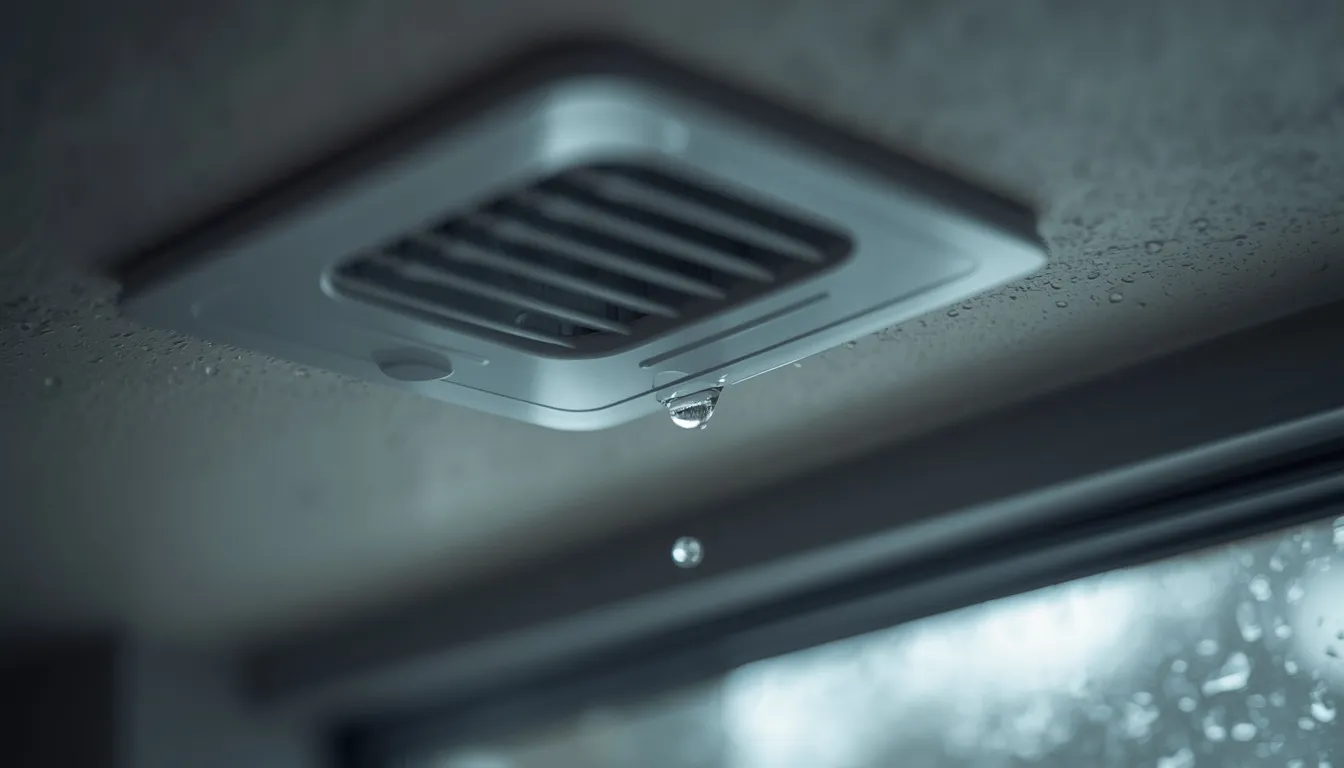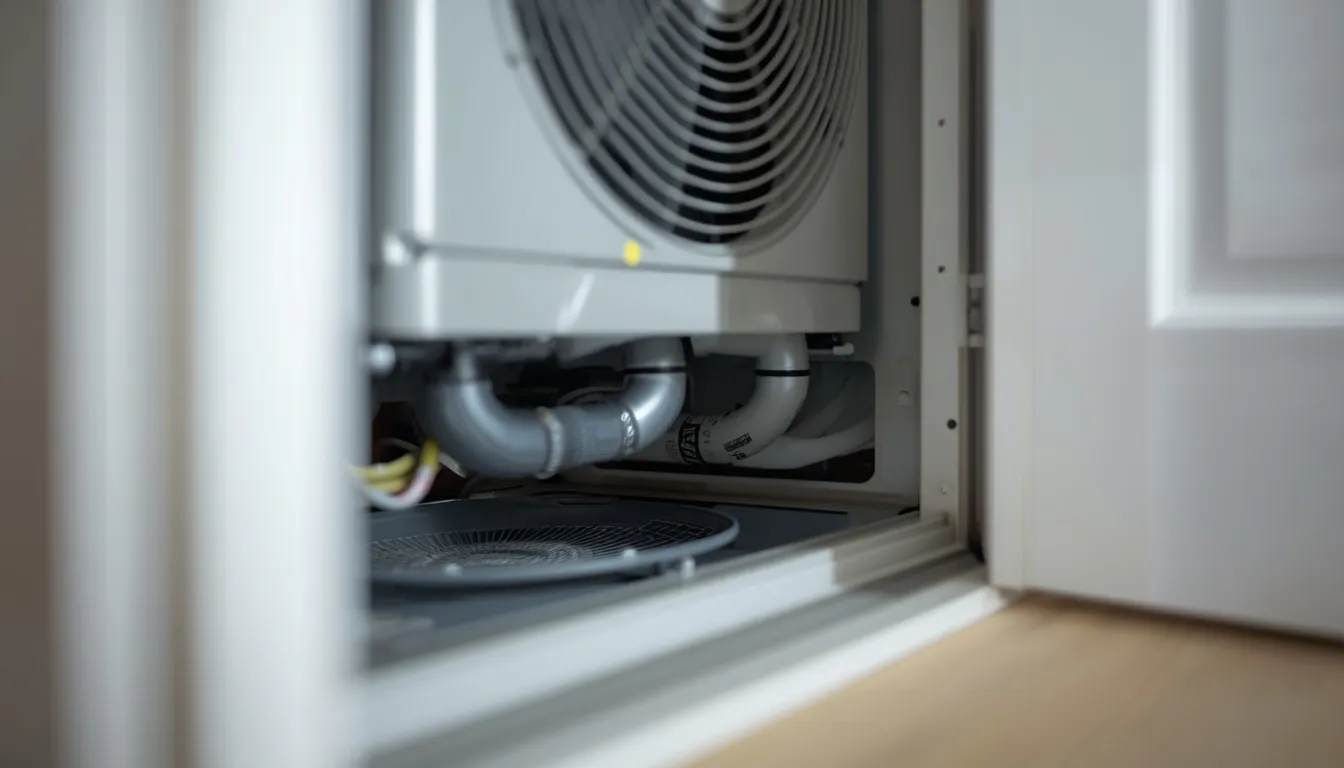

Air conditioning leak repair means finding the source of water or refrigerant loss, fixing the damaged part, and making sure the cooling system can run safely again. If you see water near your indoor unit, notice weak cooling, or see ice on the system, do not ignore it. Turn the system off if water is spreading near electrical parts.
Why Air Conditioner Leaks Should Never Be Ignored
An air conditioner should remove heat and moisture without leaving water on the floor. When you see an air conditioner leaking water, part of the drainage or cooling process may not be working correctly.
A small puddle may not look serious. Still, moisture can damage flooring, drywall, cabinets, or nearby equipment when the leak continues. Cooling problems may appear at the same time. A frozen coil, blocked drain, or dirty filter can reduce airflow and make the system work harder.
Leaks involving refrigerant are different from normal condensation. Refrigerant stays inside a sealed system. If it escapes, the AC may lose cooling power and important parts may face extra strain.
Finding the cause early is usually better than waiting for the problem to grow.
Common Signs Your AC May Be Leaking
AC leaks do not always look the same. Some cause visible water, while others affect cooling or airflow. Watch for these common warning signs.
Water Around the Indoor AC Unit
Water near the indoor AC unit is one of the clearest signs of a problem. You may see small puddles, wet flooring, ceiling stains, or moisture around the air handler.
Water in the Drain Pan
Standing water in the drain pan can point to a clogged drain line, damaged pan, or drainage problem. If the pan starts to overflow, water may spread around the unit.
Ice on the Evaporator Coil
Ice on the evaporator coil can form when airflow is too low or the system has another cooling issue. When the ice melts, it can create an AC leaking water problem.
Weak Airflow or Poor Cooling
If rooms take longer to cool or airflow feels weaker than normal, the system may have a frozen coil, dirty filter, or refrigerant problem. These issues can also make the AC run longer.
Musty Smells or High Humidity
A musty smell may develop when moisture stays inside or around the HVAC system. You may also notice that the home feels more humid than usual.
Hissing Sounds or Ice on Refrigerant Lines
An AC refrigerant leak may not create a visible puddle. Hissing sounds, ice on refrigerant lines, poor cooling, and long run times can all point to a possible refrigerant issue.
These signs do not always confirm a leak, but they are a good reason to have the system checked before the problem gets worse.
What Causes an Air Conditioner to Leak Water?
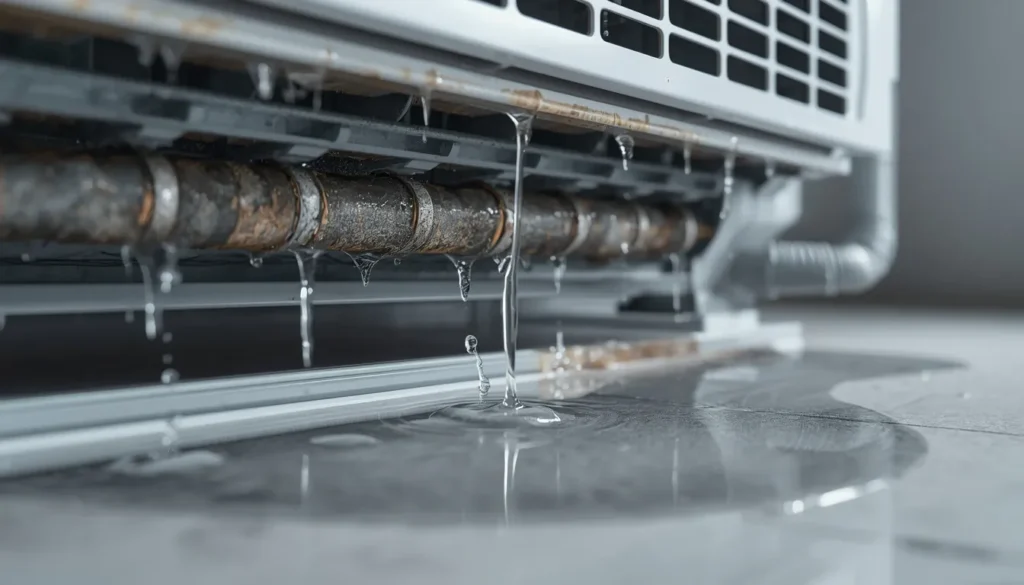
Several common problems can cause an AC leaking water issue inside a home.
A clogged AC drain line is a common cause. Dirt, dust, algae, and debris can collect inside the condensate drain line. When water cannot flow out, it may back up into the unit.
A dirty air filter can also cause trouble. Restricted airflow may make the evaporator coil get too cold and freeze. When that ice melts, the extra water can overflow the drain pan.
A cracked or rusted drain pan may let condensation escape before it reaches the drain. The condensate pump may also fail in systems that use one.
Poor drainage, low airflow, and frozen coils can all lead to an air conditioner leaking inside house areas where equipment is installed.
Finding the actual cause matters because wiping up the water does not fix what caused it.
Why a Clogged Condensate Drain Line Can Cause Water Damage
Your air conditioner removes moisture from indoor air while it cools. That moisture forms on the evaporator coil and moves into the drain pan. The condensate drain line carries the water away.
When the line becomes clogged, water has nowhere to go. It may collect in the pan, overflow, or leak around the indoor unit.
Dust, algae, dirt, and other buildup can block the pipe.
Water can spread beyond the HVAC system. Floors, ceilings, insulation, and walls may absorb moisture.
AC drain line repair may involve clearing the blockage and making sure water flows freely again. A technician should also check why the clog formed and whether the drainage system is working correctly.
How Drain Pan and Condensate Problems Lead to AC Leaks
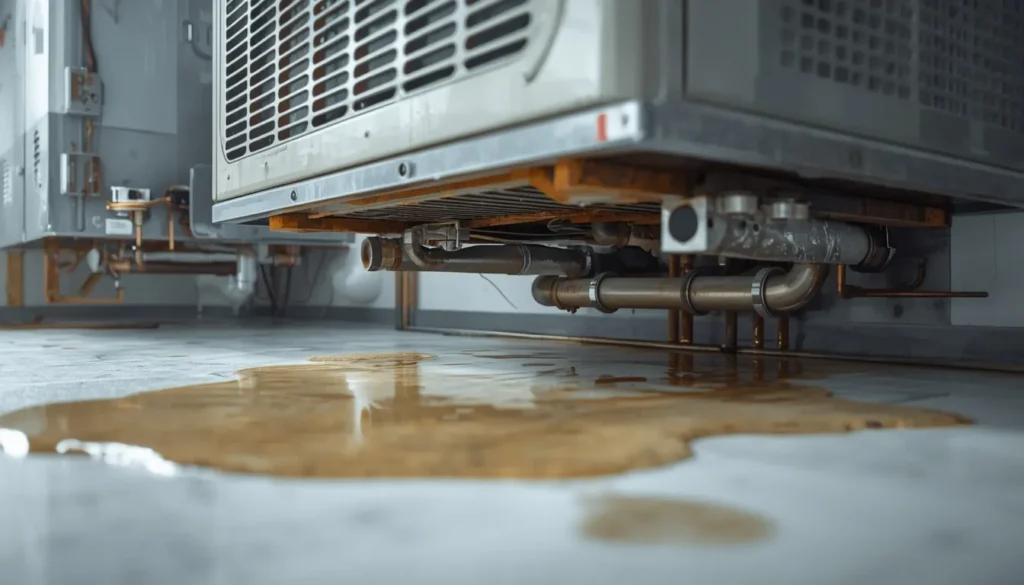
The drain pan sits below the evaporator coil and catches condensation. Over time, a metal pan may rust, while a plastic pan may crack or move out of place.
An air conditioner drain pan leaking can send water under the equipment even when the drain line is open. Clearing the line will not solve that type of leak.
A technician may inspect the pan for rust, cracks, loose fittings, and standing water. AC drain pan repair may work in some cases, while a badly damaged pan may need replacement.
An AC condensate leak can also come from loose drain fittings, a failed condensate pump, or a drain line that does not carry water away correctly.
These problems can look similar from the outside. A careful inspection helps find the true source and confirms that moisture can drain properly during future cooling cycles.
What an Evaporator Coil Leak Can Mean for Your AC
The evaporator coil sits inside the indoor section of the HVAC system. Refrigerant moves through this coil and absorbs heat from indoor air.
Two different problems can happen around it. First, the coil may freeze because of poor airflow, a dirty air filter, or another system issue. When the ice melts, water may overflow the drain pan.
Second, an air conditioner evaporator coil leak can allow refrigerant to escape. This is different from a normal water leak.
An AC evaporator coil leak may cause weak cooling, ice buildup, longer run times, or changes in refrigerant pressure. A technician can use leak detection tools and system readings to locate the problem.
Similar symptoms may come from dirty coils or airflow trouble, so the cause should not be guessed. A proper diagnosis helps determine whether repair or coil replacement makes more sense.
Signs of an AC Refrigerant Leak and Why It Needs Attention
Refrigerant moves heat through the evaporator coil, refrigerant lines, and condenser coil. It stays inside a sealed system. When an AC refrigerant leak develops, cooling performance can drop.
Common warning signs include:
- Weak cooling
The AC may run, but the air coming from the vents may not feel as cool as it should. - Frozen evaporator coil
Low refrigerant can cause the evaporator coil to become too cold and develop ice. - Ice on refrigerant lines
Ice or frost on the refrigerant lines can be a sign that the system is not operating correctly. - Long cooling cycles
The AC may run for longer periods because it struggles to reach the temperature set on the thermostat. - Hissing or bubbling sounds
Unusual sounds near the equipment or refrigerant lines may point to a possible HVAC refrigerant leak. - Higher strain on the system
Incorrect refrigerant pressure can make the system work harder and may affect other AC parts over time. - Poor overall cooling performance
Some rooms may stay warm, or the home may take much longer to cool than normal.
Adding refrigerant without finding the source of the leak does not solve the problem. A technician should locate the damaged area, determine whether it can be repaired, and then restore the correct refrigerant level.
AC Freon leak repair should be handled by a trained professional. Refrigerant systems require proper tools, testing equipment, and safe handling..
How Air Conditioning Leak Repair Is Diagnosed
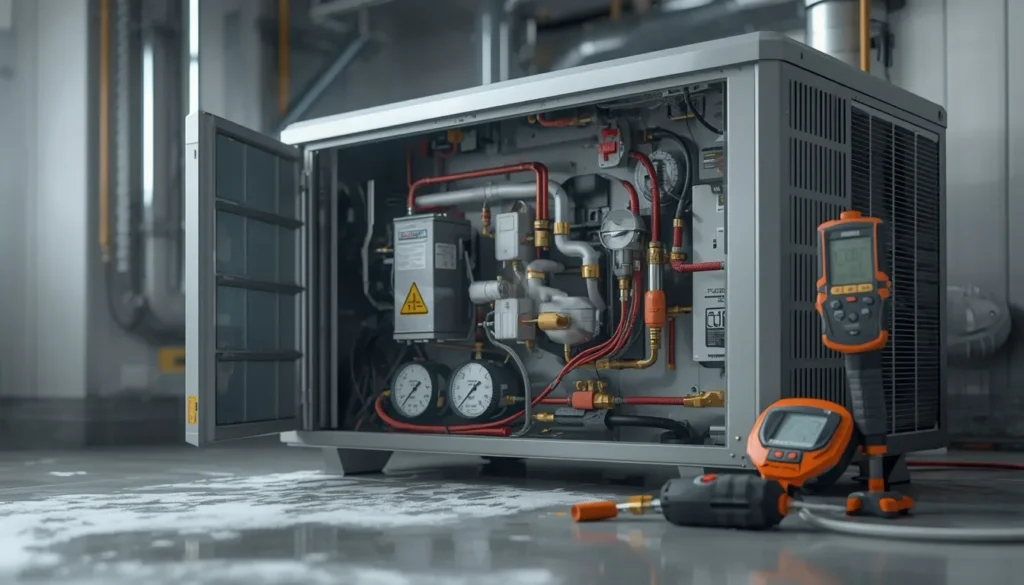
A good diagnosis starts by identifying the type of leak. Water and refrigerant problems require different checks.
For a water leak, a technician may inspect the air filter, drain pan, condensate drain line, condensate pump, evaporator coil, and drainage connections. Airflow should also be checked because low airflow can freeze the coil.
For a suspected refrigerant leak, the technician may inspect the evaporator coil, condenser coil, refrigerant lines, fittings, and other sealed parts. Leak detection equipment can help locate small leaks that are hard to see.
System pressure and cooling performance can provide more clues.
A professional should not replace parts based on one symptom. Water near the unit does not always mean the drain pan failed, and ice does not always mean low refrigerant.
The Air Squad focuses on finding the source first so the recommended repair matches the actual problem.
Can an AC Leak Be Repaired, or Does the System Need Replacement?
Many AC leaks can be repaired without replacing the entire HVAC system. The right choice depends on the type of leak, system age, repair cost, and condition of major parts.
| AC Problem | Repair May Be Best When | Replacement May Be Considered When |
|---|---|---|
| Clogged AC drain line | The line only needs cleaning or simple AC drain line repair | Drain problems keep returning because of larger system issues |
| Damaged drain pan | The pan has a small repairable problem or can be replaced easily | The surrounding equipment also has major rust or damage |
| Failed condensate pump | The pump is the main cause of the water leak | Other costly parts are also failing |
| Refrigerant line leak | The leak is easy to reach and the rest of the system is in good condition | Several refrigerant leaks are found throughout the system |
| Evaporator coil leak | The system is newer and coil replacement makes financial sense | The coil is badly corroded and the AC is already old |
| Condenser coil leak | The damaged area can be repaired and other parts are working well | The repair cost is high compared with the value of the system |
| Older HVAC system | The unit still runs efficiently and needs a reasonable repair | Repairs are becoming frequent and major parts continue to fail |
Before making a decision, ask what caused the leak, which part failed, what the repair includes, and whether other major components show signs of wear.
A trustworthy technician should explain both options clearly. The best decision depends on the overall condition of the system, not simply the fact that a leak exists.
Air Conditioning Leak Repair in West Palm Beach, FL
Homes in warm, humid climates rely heavily on cooling systems. The equipment may remove a large amount of moisture during normal operation.
If water collects near the indoor unit, the cause may involve the drain line, drain pan, frozen coil, condensate pump, or airflow. Refrigerant problems may also reduce cooling and cause ice buildup.
The Air Squad can inspect the system, identify the source, and explain the repair options in simple terms. The goal is to correct the cause rather than hide the symptom.
Quick attention matters when water is reaching ceilings, walls, floors, or electrical areas.
What to Do When You Notice Water or Refrigerant Leaking From Your AC
If you notice water around the AC, first look at where it is going. If water is spreading near electrical parts, turn the system off and avoid touching wet equipment.
Check the air filter. A very dirty filter can restrict airflow and contribute to a frozen coil. You can also look for obvious water around the drain pan or condensate line.
Do not take apart sealed refrigerant parts or try to release refrigerant. If you see ice on the coil, weak cooling, or repeated leaks, schedule an inspection.
A professional can check the drainage system, airflow, refrigerant pressure, coils, and other components.
Early action can protect the home, reduce system strain, and help restore normal cooling.
If your AC is leaking or not cooling correctly, schedule a professional inspection today. A trained technician can find the source, explain the repair, and help prevent further damage.