Your AC keeps tripping breaker because of excess electrical current, a wiring fault, an overheating connection, or a faulty breaker. Problems with the compressor, fan motor, or capacitor may also play a role. Leave a repeatedly tripping breaker off and arrange professional help. The timing offers clues, but testing must confirm the cause.
The house starts cooling, then the outdoor unit suddenly stops. You discover a tripped breaker and wonder whether the problem lies with the AC or your electrical panel.
Both are possible. A breaker trip does not automatically mean you need a new air conditioner. Sometimes a repair can solve the problem. Other times, wiring or a failing compressor needs closer attention.
The key is finding what caused the shutdown before restoring power. Note what happened before the trip, including any noise or loss of cooling. Those details can help a technician plan the inspection without asking you to restart faulty equipment.
What Repeated Trips Mean for Your Home
A circuit breaker helps protect your home’s wiring. When it keeps shutting off, treat that pattern as a warning.
Repeated trips can interrupt cooling and point to a fault that could damage equipment or create a fire risk. Turning the power back on does not remove that fault.
Watch for burning smells, smoke, sparks, or melted parts. Stay away from wet electrical equipment. If you see smoke or fire, leave the area and call emergency services.
Without those signs, you still need service for repeated trips. Keep the system off while you arrange an inspection. Avoid touching the panel to check whether it feels hot.
How Your AC Circuit Breaker Works
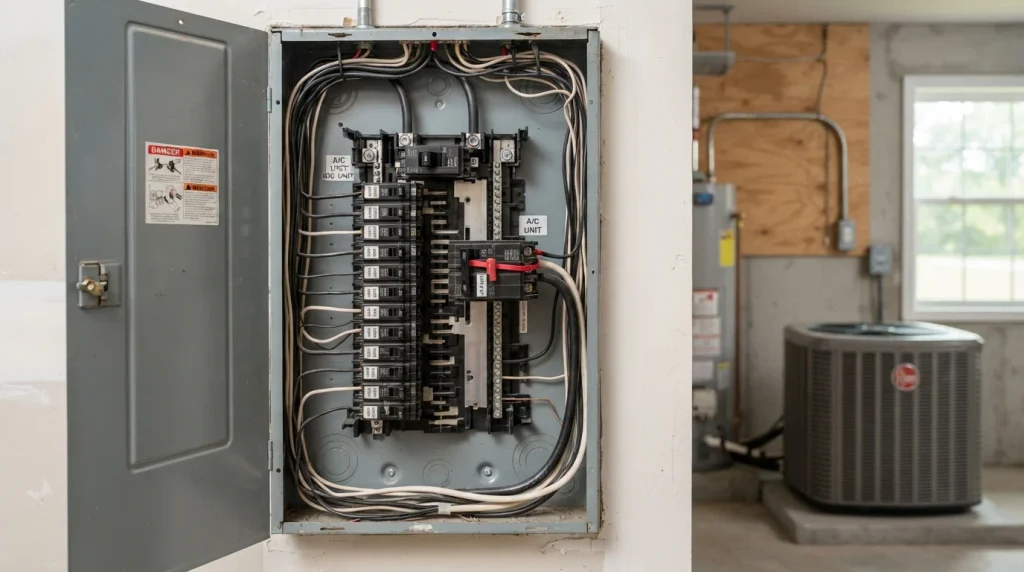
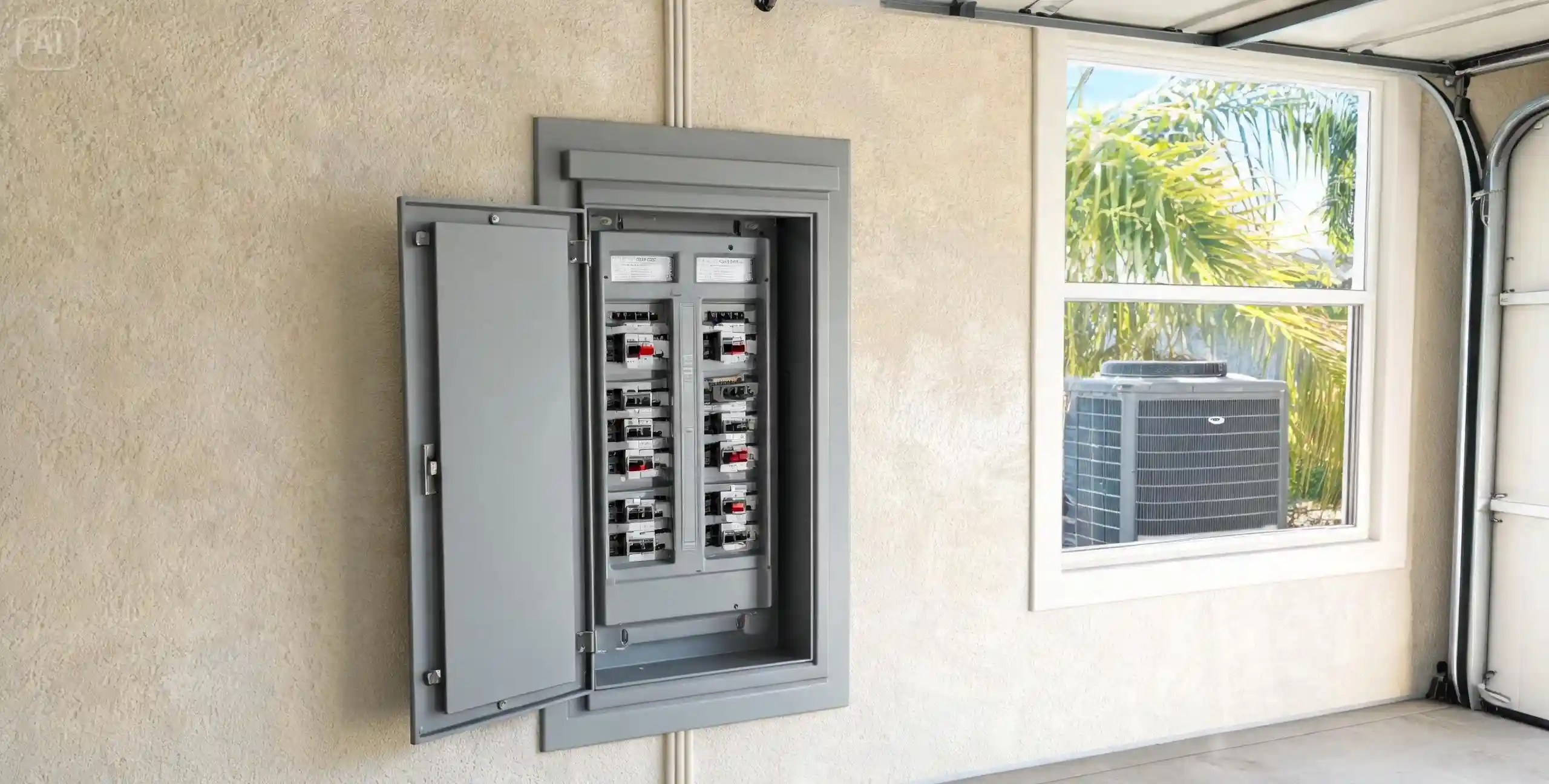
Your AC draws electrical current to run its motors and other parts. We measure that current in amps. The breaker interrupts power when certain electrical conditions exceed its protective limits.
An overload means too much current flows for too long. A short circuit lets current take an unintended path, often causing a fast trip.
Many central systems have separate circuits for the outdoor unit and indoor air handler. One can lose power while the other still runs.
That is why air may still blow from your vents even when the outdoor unit has stopped. Moving air alone does not show that the compressor has power or that the system can cool your home.
A technician checks the equipment label and circuit requirements. A bigger breaker is never a shortcut for stopping trips. The correct protection depends on the equipment, wiring, and installation requirements.
Common Causes of AC Breaker Trips
Several faults can cause the same symptom. Testing helps separate them before anyone replaces parts.
- Damaged wiring: Worn insulation can let a wire touch metal or another conductor, creating an electrical fault.
- Compressor problems: A damaged motor winding can allow electricity to reach the compressor housing. A technician may call this a short to ground.
- Fan motor failure: A seized motor or damaged winding can lead to excess current or an electrical fault.
- Capacitor failure: Some motors rely on a capacitor to start or run properly. A failed capacitor can disrupt operation, but symptoms alone cannot confirm failure.
- Poor connections: Loose or damaged connections can create heat at terminals, the disconnect, or the breaker panel.
- Dirty condenser coils: Heavy dirt or blocked outdoor airflow can limit heat release and increase strain during cooling.
- Breaker defects: A damaged breaker may trip when the equipment operates normally. A professional must rule out other faults first.
A dirty air filter also needs attention, but it does not prove why the breaker tripped. Airflow problems and electrical faults need separate checks.
A condensate float switch creates another kind of shutdown. It can stop cooling when water rises in the drain pan. That differs from a breaker trip, so avoid assuming every sudden stop means an electrical overload.
Why Your Breaker Trips at Startup
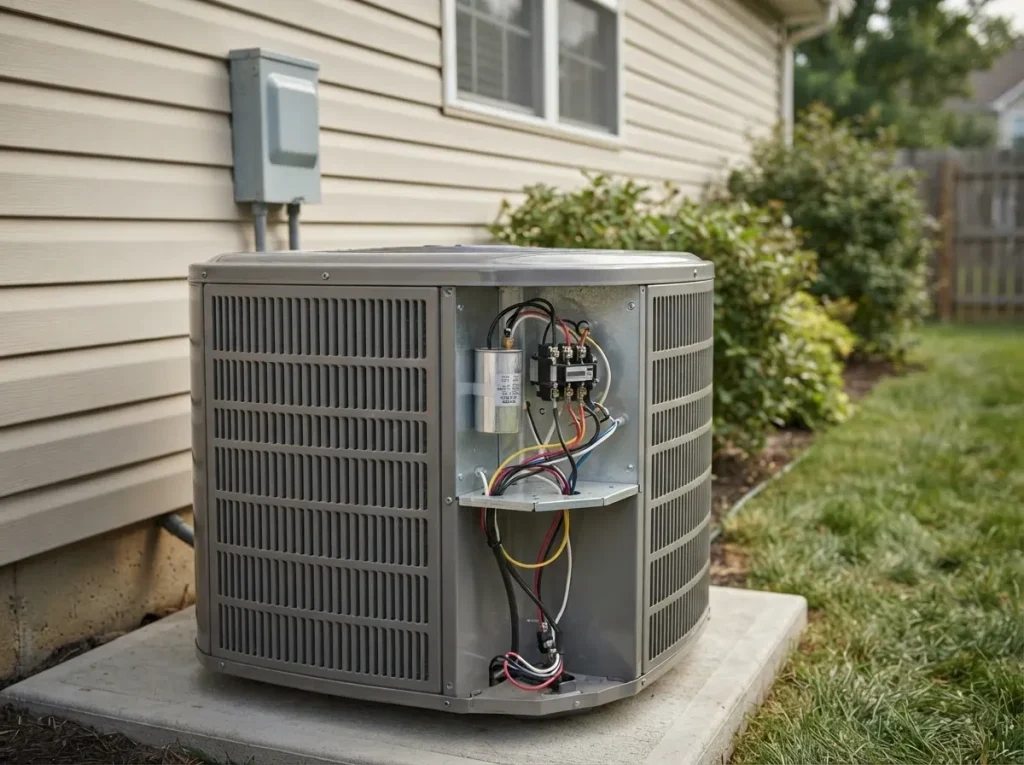
An AC breaker that trips immediately may point to damaged wiring, a motor fault, or trouble as the compressor starts.
Motors normally draw more current during startup than during normal, steady operation. The circuit must handle that brief demand within the equipment’s requirements.
A startup trip does not prove the compressor has failed. A technician may need to check the capacitor, supply voltage, motor windings, and electrical connections.
Humming without normal operation can help guide the inspection, but several faults can cause that sound. Do not restart the system to record it.
Also, a motor’s own heat protection can shut it down without tripping the panel breaker. Tell the technician which device actually switched off, if you already know.
Why It Trips After Running
If the AC trips the breaker after several minutes, heat or changing electrical load may play a role. A motor could draw excess current as it warms. A poor connection may also heat up during use.
Blocked condenser airflow and high outdoor temperatures can add strain. Still, hot weather alone does not explain a repeated breaker trip.
For example, a unit that runs briefly each afternoon needs checks under relevant operating conditions. Replacing a part without testing may miss the real cause.
Share any pattern you noticed before shutting it off. Include roughly how long it ran, whether cooling weakened, and whether the outdoor fan stopped. Do not run another cycle just to collect details.
What You Can Safely Check
Keep your checks simple and avoid electrical parts. You do not need to open equipment to gather useful information.
- Turn cooling off. Set the thermostat to Off so it stops calling for cooling. This does not disconnect all electrical power.
- Leave the tripped breaker off. Do not keep resetting it to see whether the problem clears.
- Read accessible labels. If the panel area is dry and shows no warning signs, note the circuit label without removing any cover.
- Check an accessible filter. Only use the normal filter access point described in your owner’s manual. Leave the system off afterward.
- Look from a safe distance. Note leaves around the outdoor unit, visible ice, or damage. Do not reach inside the cabinet.
- Write down recent events. Mention a power outage, repair, unusual sound, or the first time you noticed the problem.
Never remove the panel cover, tighten wiring, or test a capacitor yourself. Capacitors can hold a dangerous charge after power shuts off. Keep away from exposed wires and water near electrical parts.
When to Call an HVAC Technician or Electrician
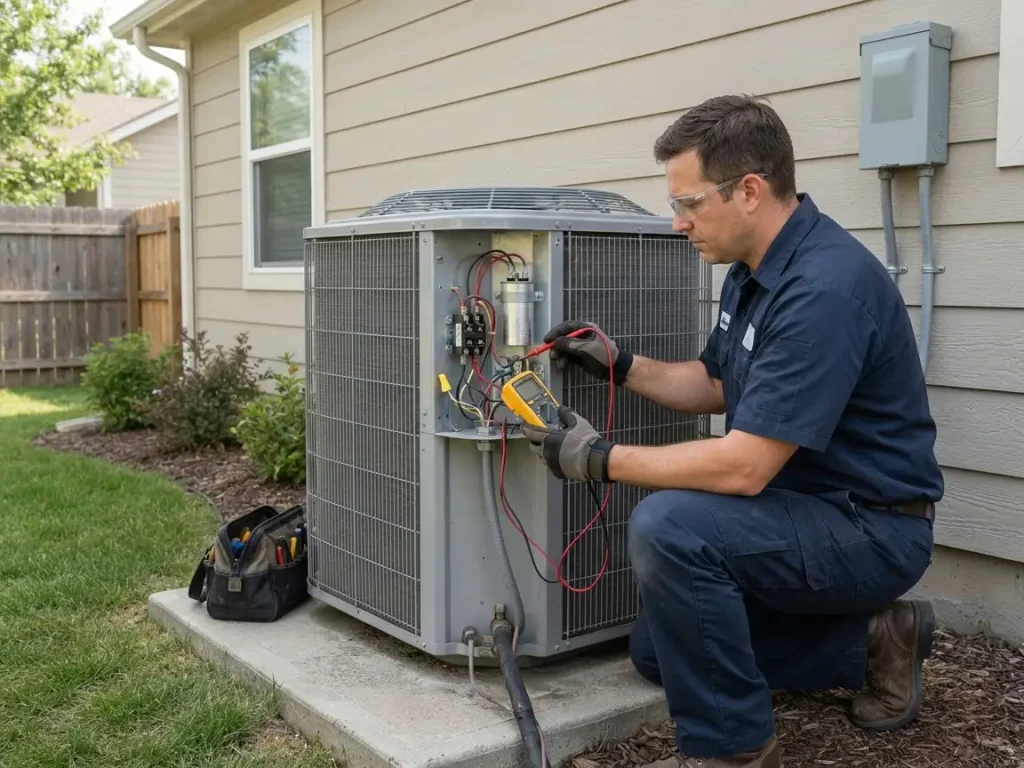
Call an HVAC technician when the problem appears tied to the cooling equipment. Examples include a stalled outdoor fan, unusual compressor sounds, or a trip when cooling starts.
Call an electrician for warning signs at the electrical panel, damaged circuit wiring, or problems affecting several circuits. Some cases need both trades.
If you cannot tell where the fault lies, explain what you observed when you request service. The Air Squad can help you arrange an AC assessment and discuss the next step.
Do not wait for a total cooling failure. Repeated trips already justify an inspection. Mention burning smells or visible damage immediately, and avoid the affected equipment while you seek help.
How Professional Repairs Help Prevent Repeat Trips
A useful repair starts with a clear diagnosis. A technician compares electrical readings with the equipment’s specifications and checks the affected components.
Depending on the findings, work may involve a capacitor, motor, contactor, wiring connection, or compressor. Panel and circuit repairs may require an electrician.
Ask what failed, what testing supports that finding, and whether the quote includes checking operation after repair. These questions help you understand the work before approving it.
Correct repairs can restore reliable cooling and reduce further stress on damaged parts. Regular maintenance can help spot dirt buildup, worn parts, and developing problems, but it cannot prevent every electrical fault.
If a major component fails, compare repair and replacement options using the system’s age, condition, warranty, and clear, written estimates.
Ask whether the failed part has warranty coverage and what labor charges apply. Keep the diagnosis and invoice for your records. Clear documentation helps if the same symptom returns or another professional needs to review the work.
Can You Keep Resetting the Breaker?
No. Repeatedly resetting an AC breaker can send power back into an unresolved fault. Leave it off until a qualified professional finds the cause.
Even if cooling returns for a while, that does not prove the system is safe. Some problems appear only after a motor or connection warms up.
Do not tape the breaker in place, bypass protection, or install a higher amp breaker to stop the trips. Those actions can leave wiring or equipment without suitable protection.
Follow the equipment maker’s guidance for any isolated trip. For a breaker that keeps tripping, stop trying to restart the system. A reset is not a repair.
Waiting for the breaker to cool does not fix a loose connection or damaged motor. A problem that disappears for an hour can return later. Keep children and other household members from restarting the affected system.
Contact The Air Squad for AC Repair in West Palm Beach, FL
A repeated breaker trip needs a clear answer, not another restart. Knowing when it happened and which circuit lost power can help guide the inspection.
Keep the cooling system off and share the signs you noticed. Ask for an explanation of the fault, the recommended repair, and the expected cost before work begins. That helps you choose your next step with confidence.
Contact our team to request an AC inspection. Tell us about the breaker trips so we can discuss your service needs and help you move toward reliable cooling.