A musty smell from AC vents can come from damp dust, dirty coils, standing drain water, wet duct materials, or moisture elsewhere in the home. The odor alone does not prove mold. Check accessible filters and visible moisture, then arrange an inspection if the smell persists or you find leaks.
The AC starts, cool air enters the room, and an unpleasant smell follows. It may remind you of damp towels or a closed basement. Even when the temperature feels right, that odor can make your home uncomfortable.
Before buying a scented spray or booking duct cleaning, find out where the smell begins. The vents may carry an odor without creating it.
A few simple observations can help. Note when the smell starts, how long it lasts, and whether every room has the same problem.
Why Does the Smell Appear When Your AC Turns On?
Your blower moves air through the equipment and ducts before sending it into your rooms. That airflow can carry odors from damp components or pick up smells near a return grille.
A mildew smell when AC comes on may seem strongest during startup, then fade. That pattern gives a useful clue, but it does not identify the cause.
An odor that continues throughout the cooling cycle deserves attention too. Compare rooms from normal standing positions rather than putting your face against a vent.
If one room smells musty even when the system stops, check nearby furnishings and visible surfaces for dampness. If several rooms develop the odor together, shared equipment or return airflow may need a closer look.
Does a Musty AC Smell Always Mean Mold?
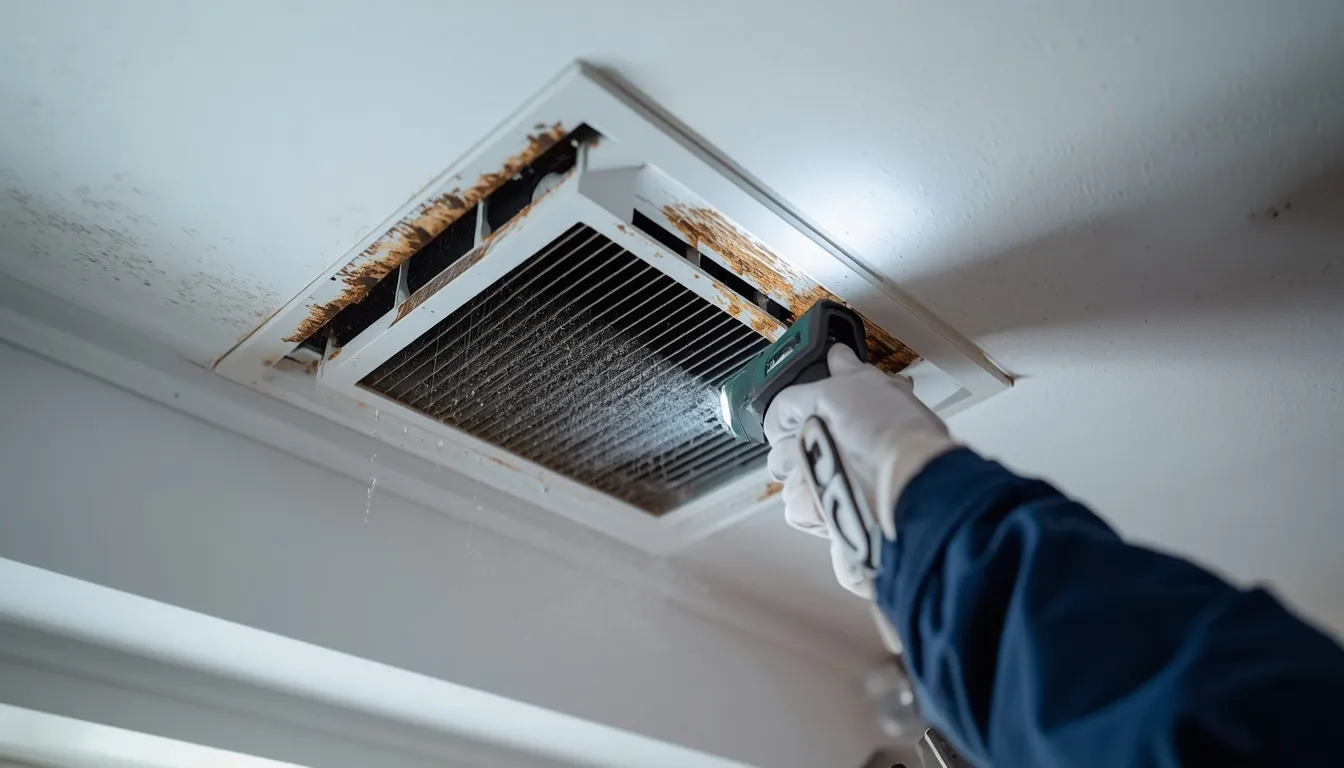
No. A musty odor can suggest a moisture problem, but smell alone cannot confirm mold or tell you its type. Damp dust, stagnant water, and wet household materials can all contribute to stale odors.
People often describe different smells as mildew or mold. Those descriptions help explain the concern, but they do not replace an inspection.
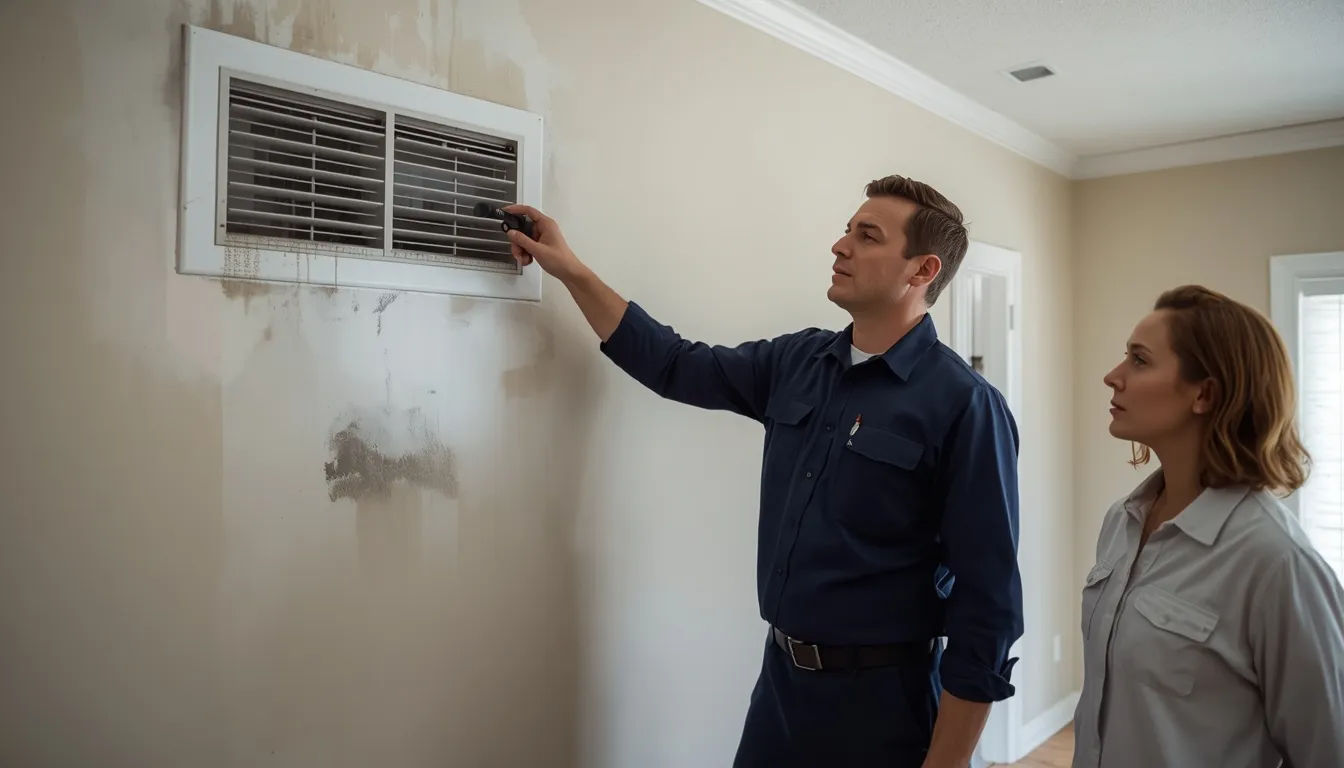
Likewise, dark marks around a grille may be dust or another deposit. Do not assume their color identifies growth. Avoid disturbing suspicious material while trying to inspect it.
The important question is why moisture remains where it should not. If cleaning removes an odor but the water source stays, the problem may return.
Ask for evidence of the source before agreeing to a treatment or replacement.
How Dirty Filters and Damp Evaporator Coils Can Cause Odors
Air filters catch dust before it reaches other parts of the system. A neglected filter can hold debris and restrict airflow. If it becomes damp, it needs attention beyond a routine replacement.
The evaporator coil gets cold during cooling. Water naturally collects on it as the system removes moisture from indoor air. Dirt on a wet coil can create conditions that support odor producing buildup.
Turn the system off before inspecting an accessible filter. Replace a dirty disposable filter with the correct size and approved type. Follow the airflow arrow and the equipment instructions.
If the filter feels wet, note that finding and arrange service. Do not assume a fresh filter fixes the moisture source.
Leave coil access and cleaning to a technician who can protect nearby electrical parts and delicate fins.
Could Standing Water in the Drain Pan Be the Problem?
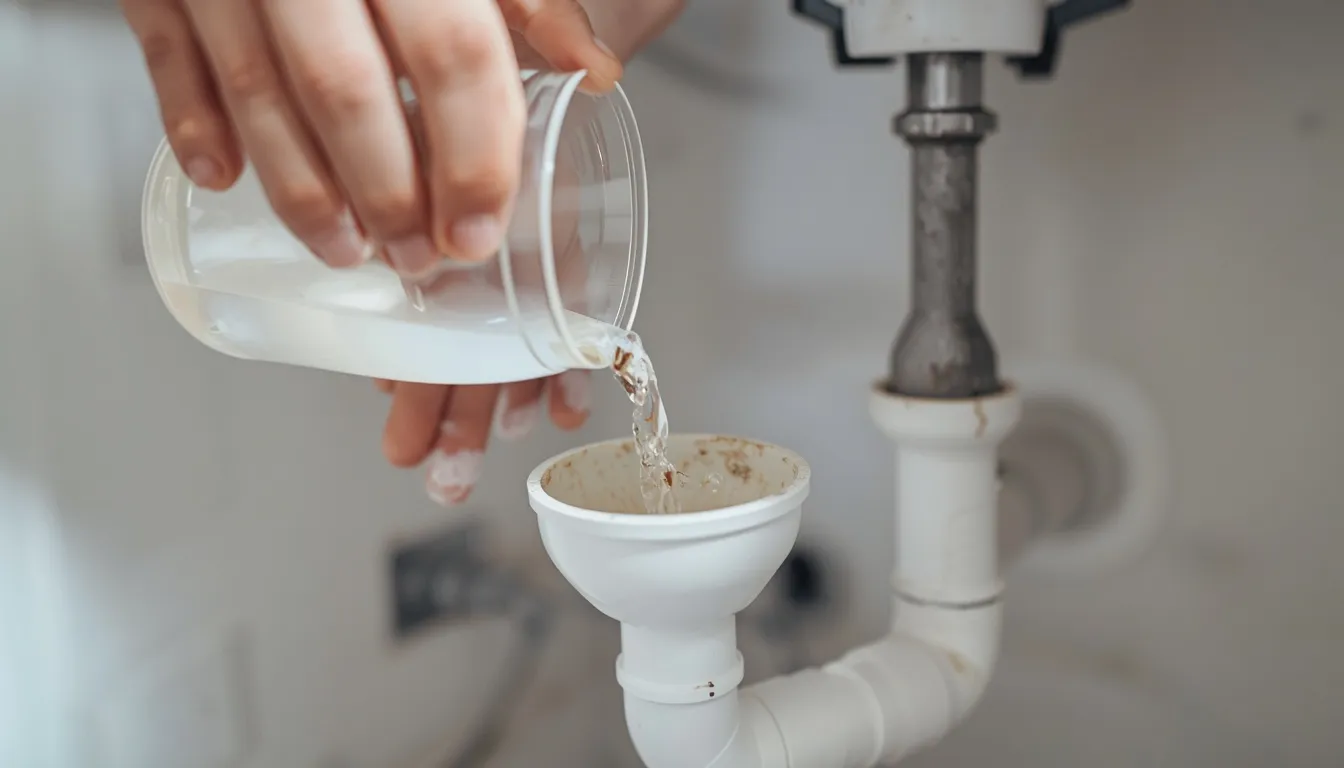
The condensate pan catches water from the indoor coil. The drain line carries it away. When drainage fails, water may remain in the pan, overflow, or collect around the indoor unit.
Dust and other buildup can block the line. A damaged pan or drainage setup may also need repair. Depending on the system, a safety switch may stop cooling when water rises.
A small amount of water passing through the pan during operation differs from persistent standing water or overflow. A technician can check whether drainage works as intended.
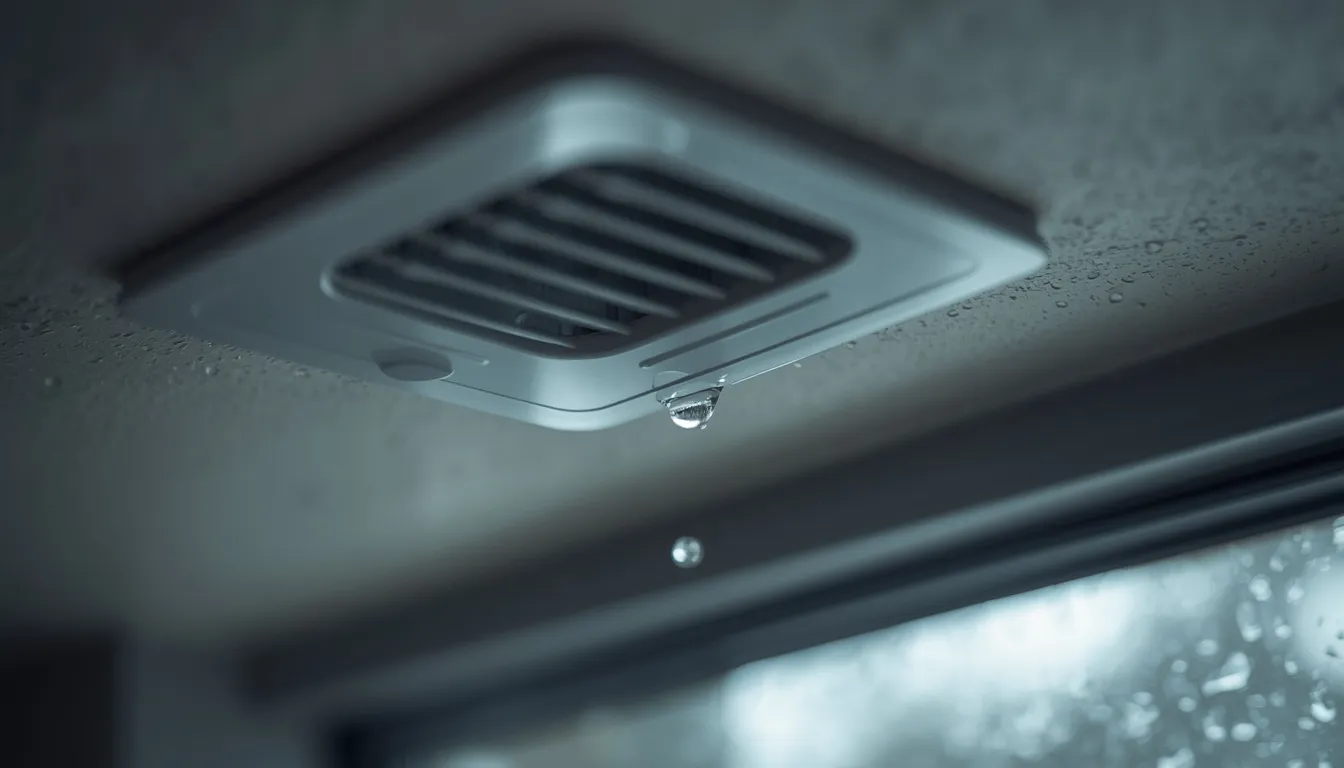
Look for visible floor moisture, ceiling stains, or dripping near accessible equipment. Turn cooling off if you find a leak and request service.
Never bypass a drain safety switch or pour household chemicals into an unknown drain opening.
Why Duct Moisture and Damaged Insulation Need Attention
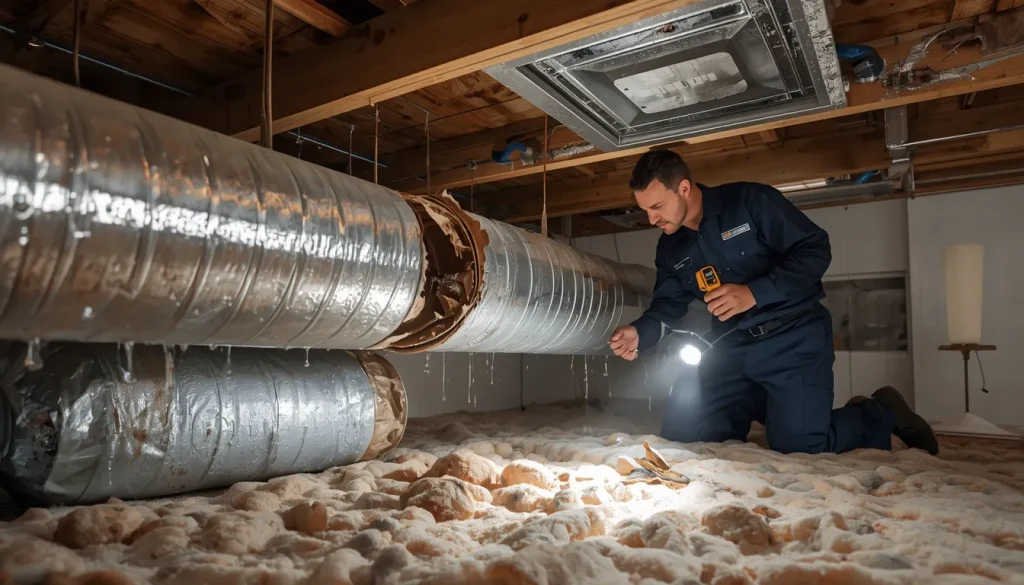
Cold duct surfaces can collect condensation when humid air touches them. Damaged insulation or air leaks can make this more likely. Wet surrounding materials may then contribute to odors.
A smell strongest near one vent does not prove that the duct contains mold. Moisture around the grille, nearby wall materials, or a local duct problem may need investigation.
When several rooms smell alike, a technician may examine shared duct sections, return pathways, and the indoor unit.
Ask about duct inspection and repair when odors occur with uneven airflow, recurring condensation, or visible insulation damage.
Wet or moldy internal duct insulation may require replacement rather than cleaning. The right approach depends on the material and its condition. Do not enter a hot attic or cut into ductwork to investigate yourself.
Can Indoor Humidity and Household Odors Reach Your Vents?
Return grilles pull room air back toward the cooling equipment. If a nearby carpet, closet, or wall smells damp, the system may circulate that odor through other rooms.
Showers, cooking, drying laundry indoors, and humid outdoor air can add moisture. Plumbing or roof leaks create a separate problem that AC maintenance alone cannot solve.
For example, a roof leak can wet insulation above a ceiling vent even when the cooling equipment works properly. The smell may seem to come from the grille because air moves through that area. Checking the surrounding building materials helps avoid paying for a system treatment that does not address the actual water problem.
Use a hygrometer to check indoor relative humidity. The EPA recommends keeping it below 60 percent, ideally between 30 and 50 percent when possible.
Measure away from direct sunlight, vents, and steam. Compare readings over several days instead of relying on one result after a shower.
Use bathroom and kitchen exhaust fans that vent outdoors. Check accessible areas near returns for damp belongings or water stains. Keep grilles clear rather than covering them to block the smell.
What Can You Safely Check When Your AC Smells Musty?
Follow this simple checklist before requesting service:
- Note whether the odor starts with cooling or remains afterward.
- Identify affected rooms and where the smell seems strongest.
- Turn the system off before checking an accessible air filter.
- Look for water near equipment without opening panels.
- Record humidity readings in a main living area.
- Check nearby rooms for visible leaks or damp materials.
- Share recent water damage or equipment changes with the technician.
Do not spray bleach, fragrances, disinfectants, or household cleaners into vents. Masking the smell leaves the source in place, and unsuitable products may damage materials or spread irritating fumes.
If you see suspected growth around the intake or know the system has moisture damage, stop using it and seek professional guidance.
Avoid touching wet electrical parts. A burning smell needs a different response from a musty odor: stop the system and request prompt assistance.
How Do Professionals Find and Fix the Source of AC Odors?
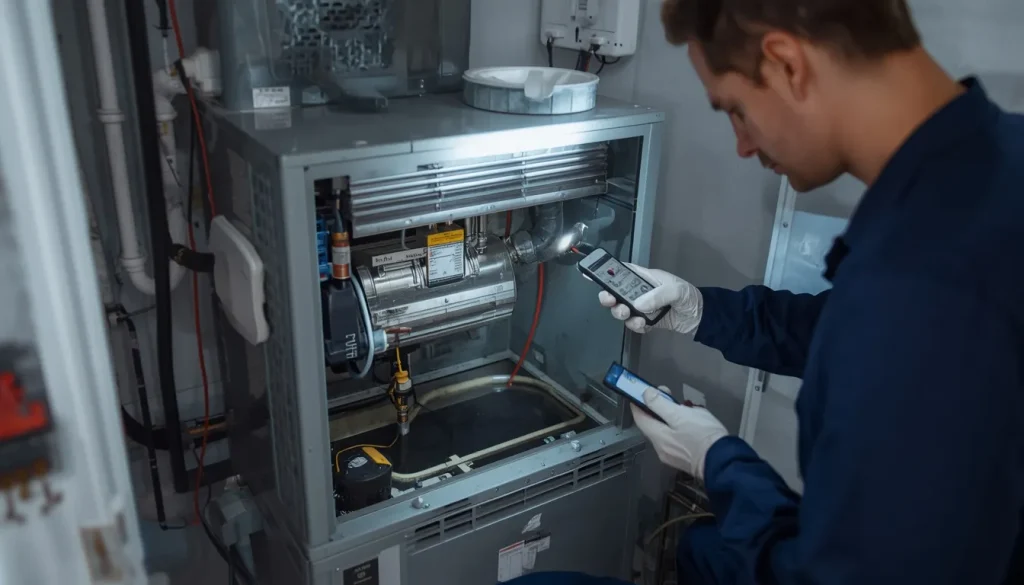
A useful inspection follows the odor and moisture clues. The technician may examine the filter area, evaporator coil, blower compartment, drain pan, and condensate line. Duct checks should follow when the findings support them.
Ask what the inspection revealed and how the proposed work addresses it. Photos of inaccessible areas can help explain a recommendation without requiring you to enter those spaces.
Depending on the cause, the solution may involve cleaning components, clearing drainage, repairing leaks, sealing ducts, or replacing damaged material. Suspected contamination may need a specialist with suitable training.
Duct cleaning is not an automatic cure. The EPA’s duct cleaning guidance recommends an assessment based on actual conditions rather than routine cleaning for every home.
Do not judge the repair only by a fresh scent immediately afterward. Ask whether the drain now flows, damaged materials need further work, and any wet areas have dried. Keep a record of the findings and completed repairs. This gives you something concrete to discuss if the odor comes back during the next period of humid weather.
Before approving chemical treatment, ask why it is necessary and whether the product suits the specific surface.
How Can You Help Keep Musty Smells From Returning?
Prevention starts with keeping moisture under control. Follow the filter schedule for your equipment and inspect filters more often when pets, dust, or heavy use increase buildup.
Arrange routine AC maintenance so a technician can check coils, drainage, and operating conditions. Address plumbing and building leaks promptly instead of waiting for the AC to dry the area.
Keep supply vents and returns clear. Use outdoor venting exhaust fans when needed, and monitor indoor humidity during damp weather.
After service, notice whether the odor returns under similar conditions. Record the timing and tell the technician. A recurring smell may mean another moisture source needs attention.
Air fresheners can change what you notice, but they do not correct drainage, wet materials, or dirty components. Lasting improvement comes from resolving the cause.
Get Help With Musty AC Odors From The Air Squad in West Palm Beach, FL
Persistent odors deserve a clear professional explanation. Start with safe checks, note any moisture, and avoid guessing that every smell requires duct cleaning or new equipment.
The Air Squad offers AC maintenance and repair services. Share when the odor begins, where it is strongest, and whether you have noticed leaks or recent changes. Those details help guide the inspection.
Contact the team to request service and find out what is causing the musty odor in your home.